
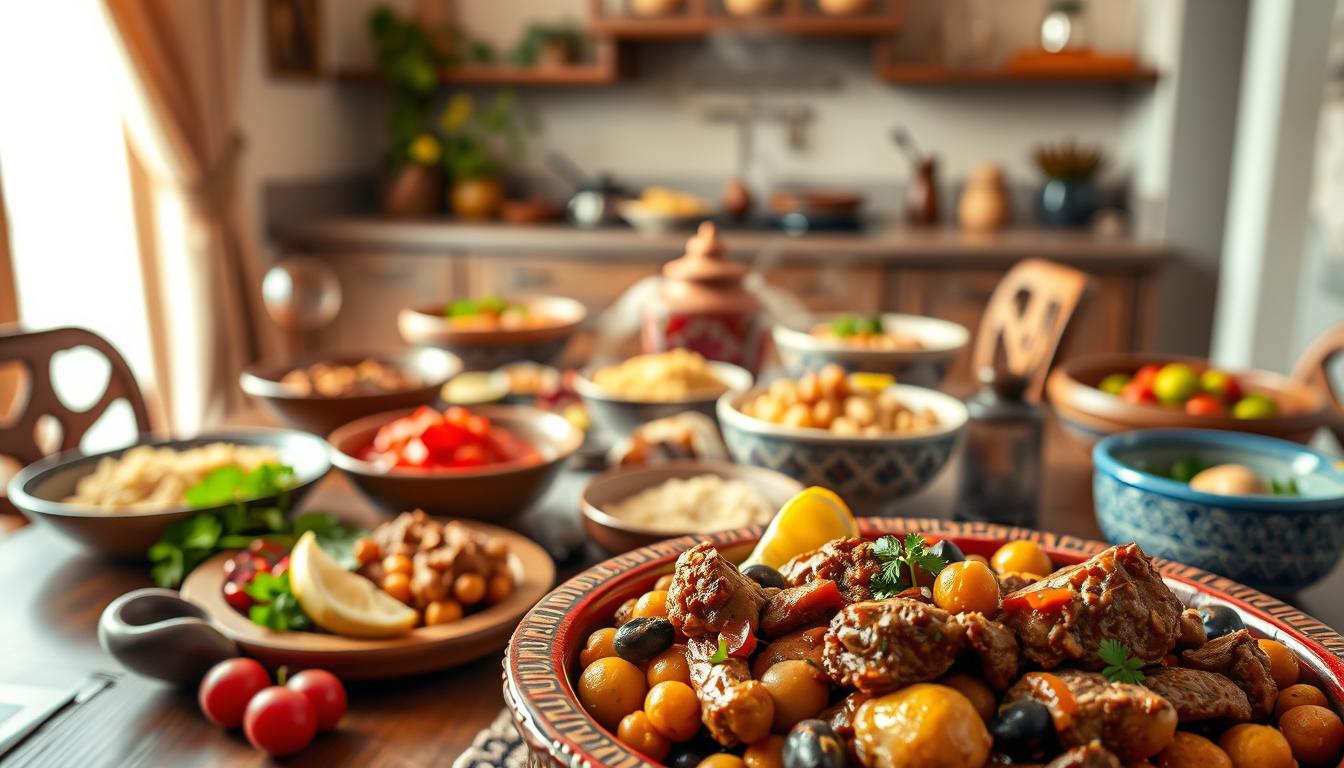


Ever thought of making the complex, aromatic flavors of North Africa in your kitchen? Many feel scared of the slow-cooking process. But, it’s all about finding the right spice balance and heat.
We’re a trusted moroccan food blog here to help. We’ll teach you the key techniques for this iconic dish. Our expert tips will help you make a moroccan bites tajine that truly honors its roots.
Key Takeaways
- Learn the fundamental spice blends that define authentic regional flavors.
- Discover how to manage heat for the perfect slow-cooked texture.
- Understand the cultural significance behind traditional clay cookware.
- Master simple preparation steps to save time in your daily routine.
- Gain access to professional tips for balancing savory and sweet profiles.
What is Moroccan Bites Tajine?
Moroccan bites tajine is a dish and a special pot. It’s a key part of traditional moroccan cuisine. It mixes history and taste in every bite.
Overview of Tajine Cooking
The tajine is a clay pot shaped like a cone. It cooks food in a way that keeps it moist. Steam from the food drips back onto it.
This method is key for tenderizing meats and veggies. It makes even tough cuts soft and tasty, without needing to watch it all the time.
Importance of Ingredients
The quality of your ingredients matters a lot in moroccan bites tajine. The slow cooking keeps the juices of veggies and meats inside. This makes the dish rich and flavorful.
- Fresh, seasonal produce gives the best taste.
- Good spices add depth to the dish.
- Layering ingredients evenly helps with heat distribution.
Traditional Vs. Modern Tajine
Oldly, cooks used charcoal braziers for a smoky flavor. Now, many use stovetops for ease. Both methods keep the essence of traditional moroccan cuisine.
| Feature | Charcoal Method | Stovetop Method |
|---|---|---|
| Heat Source | Natural Charcoal | Gas or Electric |
| Flavor Profile | Smoky and Earthy | Clean and Focused |
| Cooking Speed | Very Slow | Moderate |
| Ease of Use | Requires Skill | Beginner Friendly |
Essential Ingredients for Moroccan Bites Tajine
To make a great tajine, you need to know the key ingredients. Choosing the best parts is the first step to get authentic Moroccan flavors at home. Using fresh, seasonal items makes every dish rich and complex, just like the traditional meal.
Common Proteins Used
The heart of a good tajine is the protein you choose. Pick cuts that get better with slow cooking. They soak up the sauce’s rich flavors over time.
- Lamb: Perfect for tenderizing and mixing with sweet or savory flavors.
- Chicken: Great for mixing with preserved lemons and olives.
- Beef: Best with prunes or almonds for a classic, hearty taste.
Vegetables and Spices
The heart of our cooking is in the moroccan spices and herbs. They turn simple veggies into a fragrant dish. A special mix of spices gives our moroccan bites tajine its unique taste.
| Ingredient | Purpose | Flavor Profile |
|---|---|---|
| Saffron | Color and Aroma | Floral and Earthy |
| Ginger | Base Heat | Sharp and Warm |
| Cilantro | Freshness | Bright and Herbal |
Garnishes and Accompaniments
Adding the right garnishes and sides is key to a great meal. We often use toasted nuts or fresh herbs for a nice crunch. These touches are crucial for keeping authentic Moroccan flavors alive.
Using top-notch moroccan spices and herbs with fresh veggies makes your moroccan bites tajine healthy and tasty. Try different combinations to find your favorite.
The Cooking Equipment We Need
Let’s look at the key tools needed to cook Moroccan dishes at home. The right equipment is crucial for our moroccan cooking tips. It helps create dishes with rich, complex flavors.
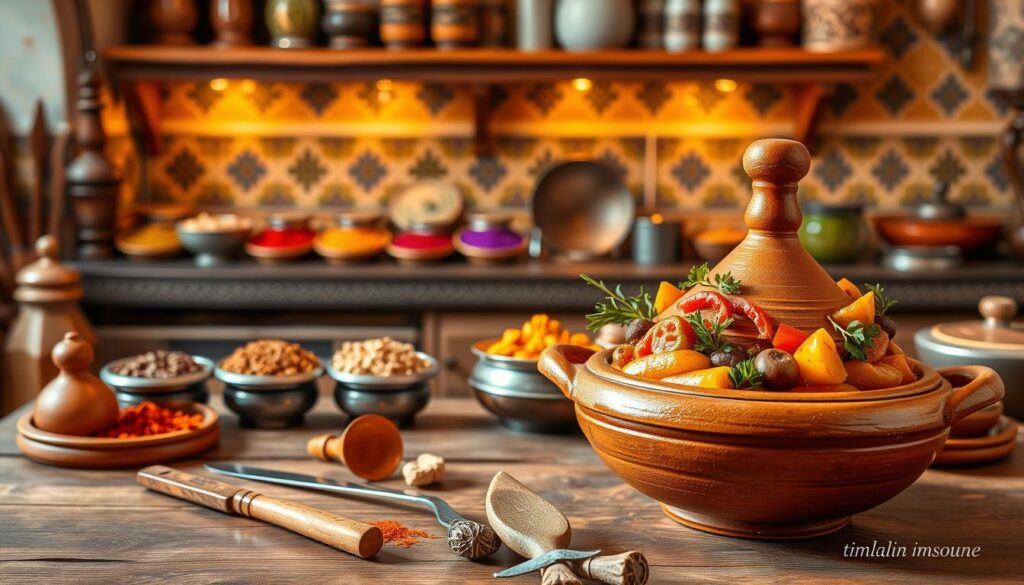
Types of Tajine Pots
Traditional clay pots are loved for their earthy taste. They need to be seasoned first to avoid cracking.
Modern enameled pots are easier to use. They don’t need seasoning and are simple to clean.
| Feature | Unglazed Clay | Enameled Cast Iron |
|---|---|---|
| Flavor Profile | Earthy and rustic | Neutral and clean |
| Maintenance | Requires seasoning | Dishwasher safe |
| Durability | Fragile | High impact resistance |
Alternative Cooking Methods
You don’t need a clay pot to make these dishes. A Dutch oven or deep skillet works great.
For a standard pot, use a heat diffuser. It spreads heat evenly, so your food won’t burn.
Essential Kitchen Tools
To make easy tajine cooking a breeze, have these tools ready. They make slow-cooking easier and more confident.
- Heavy-bottomed pans for even heat.
- A heat diffuser to protect food.
- Long-handled wooden spoons for stirring.
- A sharp chef’s knife for cutting veggies.
Step-by-Step Guide to Preparing Tajine
Making a perfect tajine is a rewarding journey. It takes patience and precision. Follow these moroccan cooking tips to make every meal a true taste of our traditional cuisine.
Prepping the Ingredients
Start with the raw ingredients. Marinate your proteins for at least two hours. This lets the flavors soak in deeply.
For vegetables, aim for even cooking. Here’s how to do it right:
- Chop root vegetables into uniform chunks so they soften at the same rate.
- Pat your meat dry before searing to achieve a better crust.
- Organize your workspace so that all items are ready before you turn on the heat.
Cooking Techniques
The secret to a great tajine is layering ingredients. Start with the hardest vegetables at the bottom. Then add the meat, and finish with softer vegetables on top.
This way, your moroccan spices and herbs blend perfectly into the sauce. Keep the heat low and steady. This prevents burning and lets the juices create a rich, flavorful gravy.
Presentation Tips
The look of a dish matters as much as its taste. Arrange your vegetables in a conical shape. This mirrors the tajine pot’s form.
Top your dish with fresh cilantro or parsley for a burst of color. Using these moroccan spices and herbs as a garnish adds a final aroma. It welcomes your guests with true hospitality.
Popular Moroccan Bites Tajine Recipes
Explore the beloved tajine recipes that highlight our national cuisine. These flavorful Moroccan dishes show the amazing versatility of our slow-cooking methods. They are perfect for both beginners and experienced cooks.
Chicken with Preserved Lemons
This dish is a favorite in many homes. It combines salty preserved lemons and green olives for a tangy sauce. The sauce pairs well with tender chicken. Use high-quality saffron for that golden color and aroma.
Lamb with Apricots
This recipe offers a sweet and savory mix. Slow-cooked lamb is tender, and dried apricots add a sweet touch. It’s a hit at family gatherings.
Vegetarian Options
Our markets have fresh produce for amazing meat-free meals. Try homemade tajine recipes with carrots, zucchini, and chickpeas. Season with ginger and turmeric for a light, healthy dish.
| Recipe Type | Primary Flavor Profile | Cooking Time |
|---|---|---|
| Chicken Tajine | Tangy and Salty | 60-75 Minutes |
| Lamb Tajine | Sweet and Savory | 90-120 Minutes |
| Vegetable Tajine | Earthy and Spiced | 45-50 Minutes |
Learning these flavorful Moroccan dishes brings Moroccan culture into your home. These homemade tajine recipes are easy to follow. They let you make authentic Moroccan dishes with ease. Let these popular Moroccan recipes spark your next cooking project.
Pairing Your Tajine with Accompaniments
The secret to a perfect tajine is in the right sides. Choosing the right accompaniments balances the rich flavors of your main dish. This creates a dining experience that pleases the taste buds.
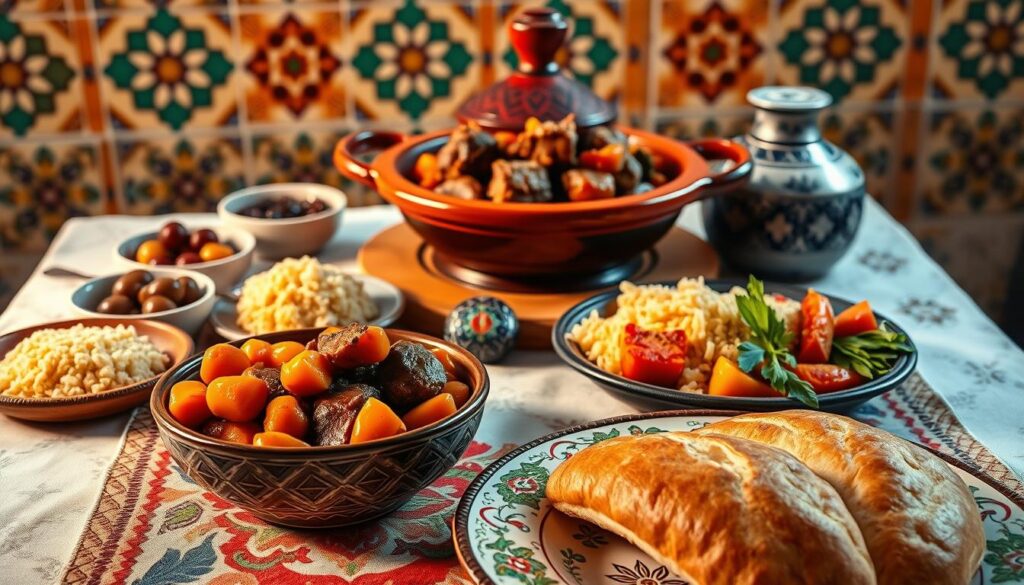
Traditional Moroccan Sides
Every tajine feast needs the local cuisine’s staples. Fluffy couscous is great for soaking up juices. Warm khobz bread is perfect for scooping up meat and veggies.
These sides add texture to your meal. Using fresh grains and bread brings out the true authentic moroccan flavors.
Recommended Dips and Sauces
For a refreshing contrast, try vibrant salads and dips. They cleanse your palate and add bright, acidic notes. Here are some great options:
- Zaalouk: A smoky salad of eggplant and tomatoes.
- Taktouka: A zesty mix of roasted bell peppers and tomatoes.
- Preserved Lemon Gremolata: A tangy topping for lamb or chicken.
These dips are more than sides; they’re key to a balanced meal. Experimenting with these will bring authentic moroccan flavors to your table.
Serving Tips for our Tajine Feasts
Bringing people together around a steaming pot is at the heart of our moroccan food blog. The way you present your meal sets the mood for your guests. Proper service can turn a simple dinner into a memorable event.
Dining Customs in Morocco
In our culture, the tajine is placed in the center of the table for everyone to share. Guests eat directly from the vessel using fresh bread as their utensil. This communal style of dining encourages connection and conversation.
Ideal Serving Temperature
Serving your flavorful moroccan dishes at the right temperature is key. The clay pot retains heat well, keeping the stew warm. Let the dish rest for five minutes after removing it from the heat to allow the aromas to settle.
Portion Sizes
Planning the right amount of food is crucial for any meal. For a standard meal, use about 250 grams of protein per person. Here’s a guide to help you plan your next feast.
| Group Size | Tajine Size | Estimated Protein |
|---|---|---|
| Small (2-3 people) | Small (25cm) | 500g – 750g |
| Medium (4-6 people) | Medium (30cm) | 1kg – 1.5kg |
| Large (8+ people) | Large (35cm+) | 2kg+ |
As a dedicated moroccan food blog, we believe the joy of sharing flavorful moroccan dishes makes every meal special. By following these simple serving customs, your guests will feel welcomed and satisfied. Hosting your next authentic gathering will be a breeze.
Storing and Reheating Your Tajine
Having leftovers is the best part of cooking a big batch. It’s important to store them right to keep your homemade tajine recipes tasting great the next day.
Best Practices for Storage
Let your meal cool down to room temperature before refrigerating it. Use shallow, airtight containers to cool it down fast and safely.
This method stops bacteria from growing and keeps your food fresh. By following these tips, easy tajine cooking becomes a regular part of your meal prep.
Reheating Techniques
To reheat your leftovers, aim to warm them up without overcooking. Add a bit of water or broth to the dish to keep the sauce moist.
Reheat it slowly on the stovetop over low heat. This method keeps your ingredients tender and your homemade tajine recipes flavorful.
If you prefer the oven, cover the dish with foil to keep moisture in. Low-temperature heating is key to easy tajine cooking that’s always fresh.
Discovering Regional Variations in Morocco
Our journey through Moroccan cooking shows a world full of flavors and history. We invite you to see how geography shapes traditional Moroccan cuisine.
Rabat-style Tajine
The capital city, Rabat, adds a touch of elegance to meals. Chefs here use delicate spices and fresh seafood from the Atlantic. These recipes show a perfect mix of sweet and savory.
Marrakech-style Tajine
Marrakech’s markets are known for their bold flavors. You’ll find lots of preserved lemons and olives. This style brings the Red City’s energy to every bite.
Berber Influences in Tajine Cooking
Berber traditions are at the heart of our cooking. They use unglazed clay to keep food moist. Try these styles at home and share your success with us. Let’s explore these timeless flavors together.
